Asturias
Beyond the Beaten Path: Uncovering the Cultural and Natural Treasures of Asturias, Cebu
For many travelers, exploring Cebu means heading straight to the white-sand beaches of the north or the diving hubs of the south. Yet, tucked away along the rugged northwestern coast of the island lies Asturias—a charming, third-class municipality that invites visitors to slow down and experience the island before the onset of mass commercialization. This quiet coastal town offers a beautiful blend of rich cultural heritage and untouched eco-adventures, making it a refreshing sanctuary for those looking to explore Cebu's western countryside.
To truly understand the unique cultural identity of Asturias, one must look back to its original name, Naghalin. Derived from the Cebuano word lalin, which means "to migrate," the town's history is deeply rooted in the stories of travelers from distant lands who decided to plant new roots along its scenic coastlines. By the mid-19th century, this booming community of settlers grew too large to remain a mere barrio of neighboring Balamban. Spearheaded by local leader Don Eugenio Alonzo, the town successfully petitioned for its independence, which was officially granted on February 8, 1871, and renamed Asturias in honor of the famous principality in Spain. Today, this vibrant history of welcoming newcomers and building a shared home is celebrated every year during the colorful Lalin Festival, a lively display of dance, music, and community pride.
Asturias is also a destination where history can quite literally be tasted through its unique culinary heritage. While most towns across the Philippines craft their traditional rice cakes (bingka) using glutinous rice, Asturias proudly uses dawa (millet seeds), an ancient and resilient grain that has been harvested in the region since pre-colonial times. Baking bingka dawa is a meticulous labor of love, where the millet is mixed with rich coconut milk and sugar, poured into banana leaf-lined molds, and slow-baked over glowing coconut husks. The result is a uniquely grainy, subtly sweet delicacy that has become the town's signature gastronomic treasure.
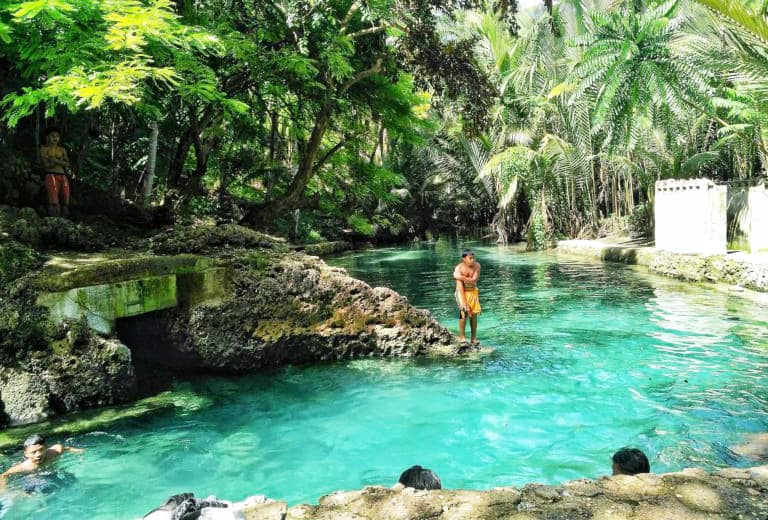
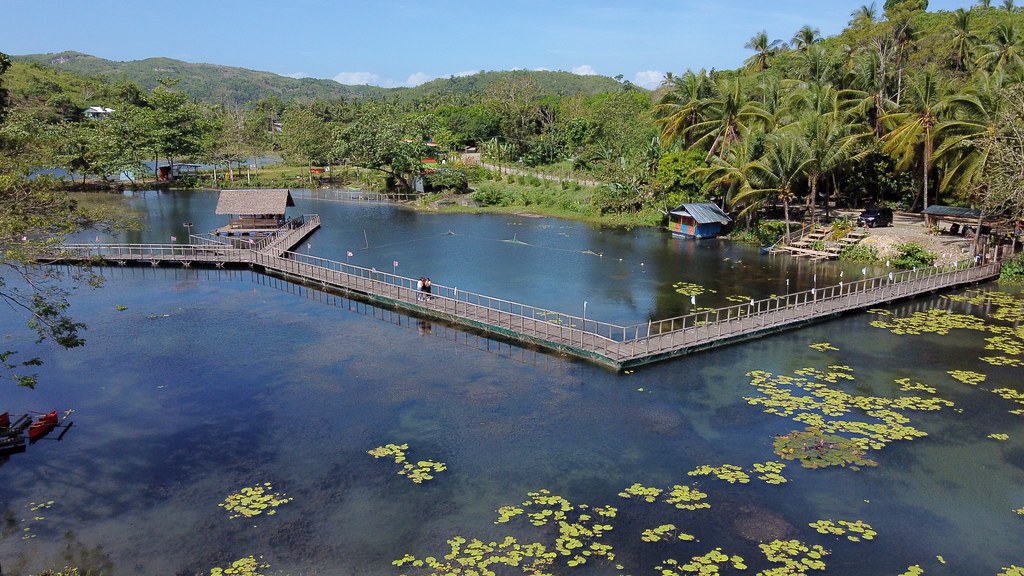
Beyond the kitchen and the festival streets, the natural landscape of Asturias is a breathtaking playground for nature lovers. Because it sits between rolling hills and the protected marine waters of the Tañon Strait, the town boasts an array of diverse ecological gems. Chief among these is Buswang Lake, one of the largest natural freshwater lakes in Cebu. Flanked by dramatic limestone cliffs, its serene waters offer a completely tranquil escape perfect for sightseeing and soul-searching.
The town's unique geography also hides refreshing aquatic treasures, such as the ice-cold waters of Agtugop Cold Spring and the therapeutic warmth of San Roque Hot Spring. Deep in the mountain barangays, adventurers can trek to the pristine cascades of Manguiao Falls and Tagbubonga Waterfalls. At the center of town life stands the beautiful, historic San Roque Dumonfior Parish Church, serving as the heartbeat of local faith and history where communities gather to honor their patron saint every August. Asturias ultimately proves that some of the best travel experiences aren't found in crowded tourist hubs, but in places where history is respected, traditions are preserved, and nature is left to thrive.
UPCOMING FESTIVAL
No upcoming festival
Check back later or browse the full events calendar.
Verified Establishments
Hand-picked destinations preserving Asturias's legacy.
No Verified Establishments added.