Barili
Barili: The Waterfall Sanctuary and Agri-Tourism Haven of Southern Cebu
The municipality of Barili, proudly known as the "Grand Old Town of Western Cebu," holds a deeply rooted place in the colonial and pre-colonial narrative of the province. Long before Spanish expeditions marched into its valleys, the area was a highly fertile settlement named after balili, a vibrant local grass that blanketed its rolling hills. Recognizing its immense agricultural potential and strategic location, Spanish conquistadores established a presence here as early as 1602, later erecting the town's ecclesiastical parish in 1614 and formally founding the municipality in 1632. Throughout the Spanish era, Barili functioned as a wealthy crown encomienda (land grant) and served as the vital administrative and judicial capital of western Cebu, transforming it into a grand center of wealth, law, and upper-class heritage.
As the decades progressed into the 20th century, Barili's strategic geography placed it at the center of major historical events. During World War II, the town became a poignant historical landmark as the exact site where the retreating Philippine Supreme Court Chief Justice José Abad Santos was captured by Japanese forces in 1942 before his eventual martyrdom. The townspeople's fierce pride in their deep roots culminated in a historic milestone in 2006, when Barili became the very first municipality in the entire province of Cebu to pass a dedicated heritage ordinance. This pioneering local law officially protected its surviving Spanish-era ancestral homes, centuries-old monuments, and public plazas, ensuring that the architectural soul of the "Grand Old Town" would never be lost to modern urbanization.
Culturally, Barili is a vibrant agricultural heartland where life is beautifully dictated by the rhythms of the earth, the sea, and deep Catholic devotion. The community's profound gratitude for its abundant land is beautifully displayed every late July during the Panumod Festival, celebrated in tandem with the feast of their patron saint, Señora Santa Ana. The streets come alive with synchronized choreography and bright costumes as dancers perform rituals mimicking the trading and delivering of livestock and crops to thank the heavens for prosperous yields. This agricultural identity has also given rise to a unique culinary culture; Barili is famous across Cebu as a premier stop for organic delicacies, most notably its fresh, locally produced goat’s milk (gatas sa kanding), native cheeses, and savory tilapia.
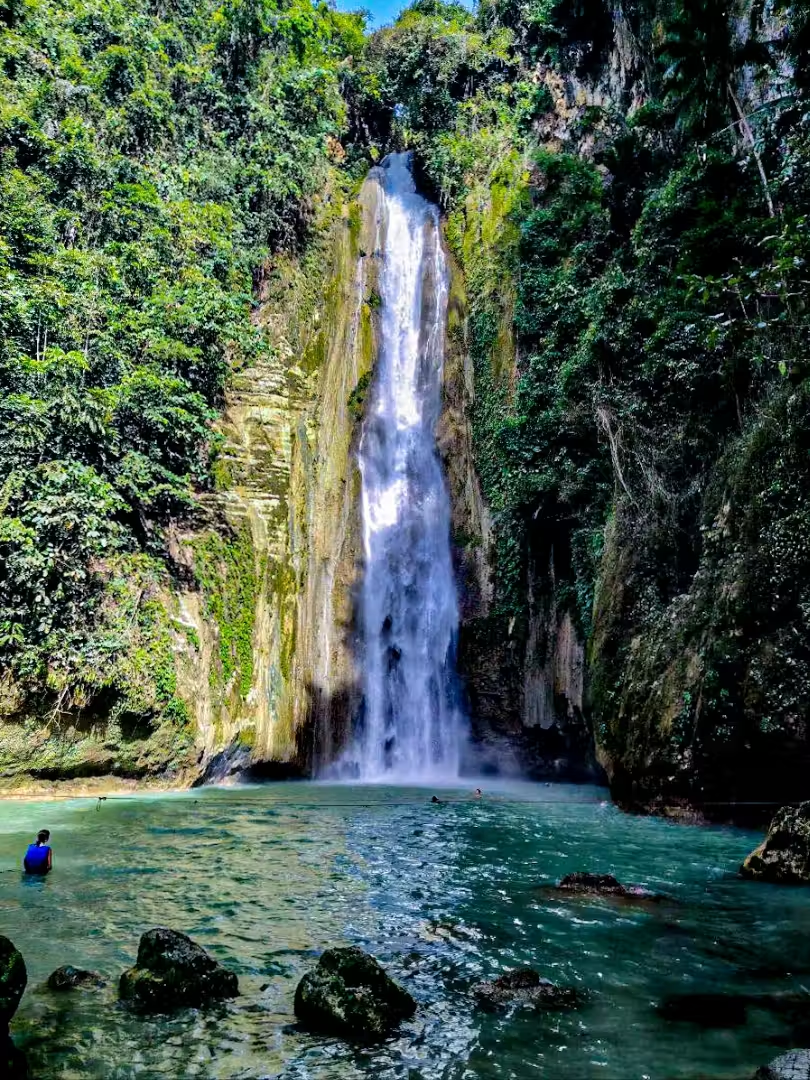
In the modern era, Barili has successfully leveraged its dramatic natural landscapes to become a powerhouse for eco-tourism and outdoor adventure in western Cebu. The crown jewel of its tourist attractions is the majestic Mantayupan Falls, widely celebrated as one of the highest and most accessible waterfalls in the entire province. Cascading down a towering 98-foot cliff inside a lush, amphitheater-like forest canopy, the waterfall fills a massive, cool natural basin that draws thousands of swimmers and nature lovers looking to escape the city heat. The local government has thoughtfully maintained the site with hanging footbridges and viewing decks, making it a spectacular, family-friendly sanctuary that perfectly balances raw nature with safe accessibility.
Beyond its cascading waters, Barili’s diverse topography offers tourists a captivating mix of coastal escapes and unique roadside agri-tourism experiences. Along the highway, sun-seekers flock to Sayaw Beach, a scenic coastal stretch famed for its fine sands, clear blue waters, and mysterious seaside rock caves that visitors can explore by renting local outrigger boats. For those heading deeper into the countryside, the Bolocboloc Hot Springs offer therapeutic, mineral-rich pools perfect for a relaxing soak. Meanwhile, the famous Molave Milk Station has become an iconic, must-visit roadside oasis for travelers traversing the southern highway, offering a delicious farm-to-table experience featuring homemade goat's milk ice cream, fresh yogurts, and local pastries.
Ultimately, Barili’s modern tourism sector serves as a vital economic driver and a beautiful reflection of the town's resilient spirit. By prioritizing eco-tourism over heavy industrialization, the municipality has successfully preserved its peaceful, old-world charm while creating sustainable jobs for local tour guides, farmers, and artisans. Visiting Barili today is like stepping into a living storybook where travelers can marvel at centuries-old heritage houses in the morning, swim under a roaring jungle waterfall in the afternoon, and enjoy fresh dairy treats straight from local pastures before sunset. It stands as an irreplaceable destination that beautifully captures the authentic, green, and historic heart of Western Cebu.
UPCOMING FESTIVAL
No upcoming festival
Check back later or browse the full events calendar.
Verified Establishments
Hand-picked destinations preserving Barili's legacy.
No Verified Establishments added.